
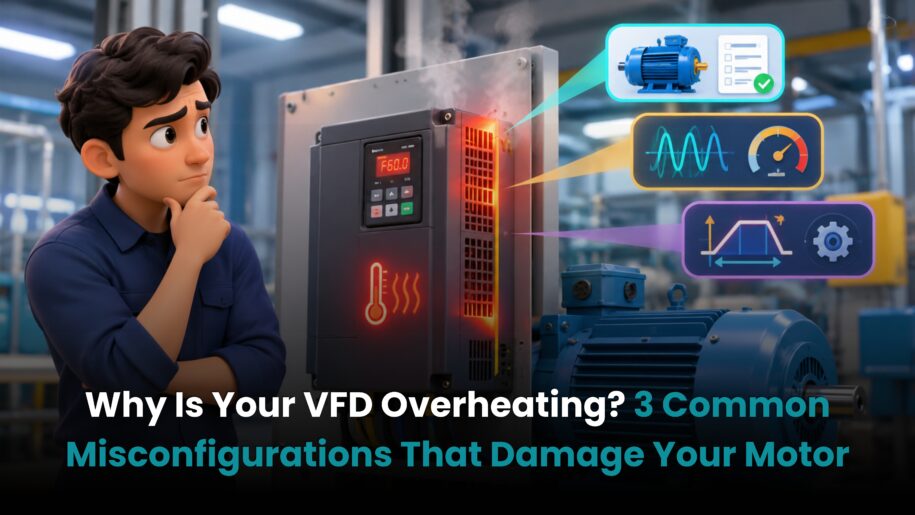
VFD Overheating? 3 Common Settings That Could Be the Cause
Before you replace the drive, check how it is configured for your motor and your application.
A Variable Frequency Drive (VFD) plays a major role in modern industrial automation by controlling motor speed, improving process control and supporting efficient machine operation. When a VFD starts overheating, the issue is not always a faulty drive.
In some cases, incorrect configuration, unsuitable operating parameters or improper VFD selection can increase thermal and electrical stress on both the drive and the motor. This can lead to trips, inconsistent machine performance, reduced motor life and unexpected production interruptions.
So before replacing a VFD, it is worth checking whether the drive is correctly configured for the motor and the actual application. Here are three common VFD misconfigurations that can contribute to overheating, and what can be done to avoid them.
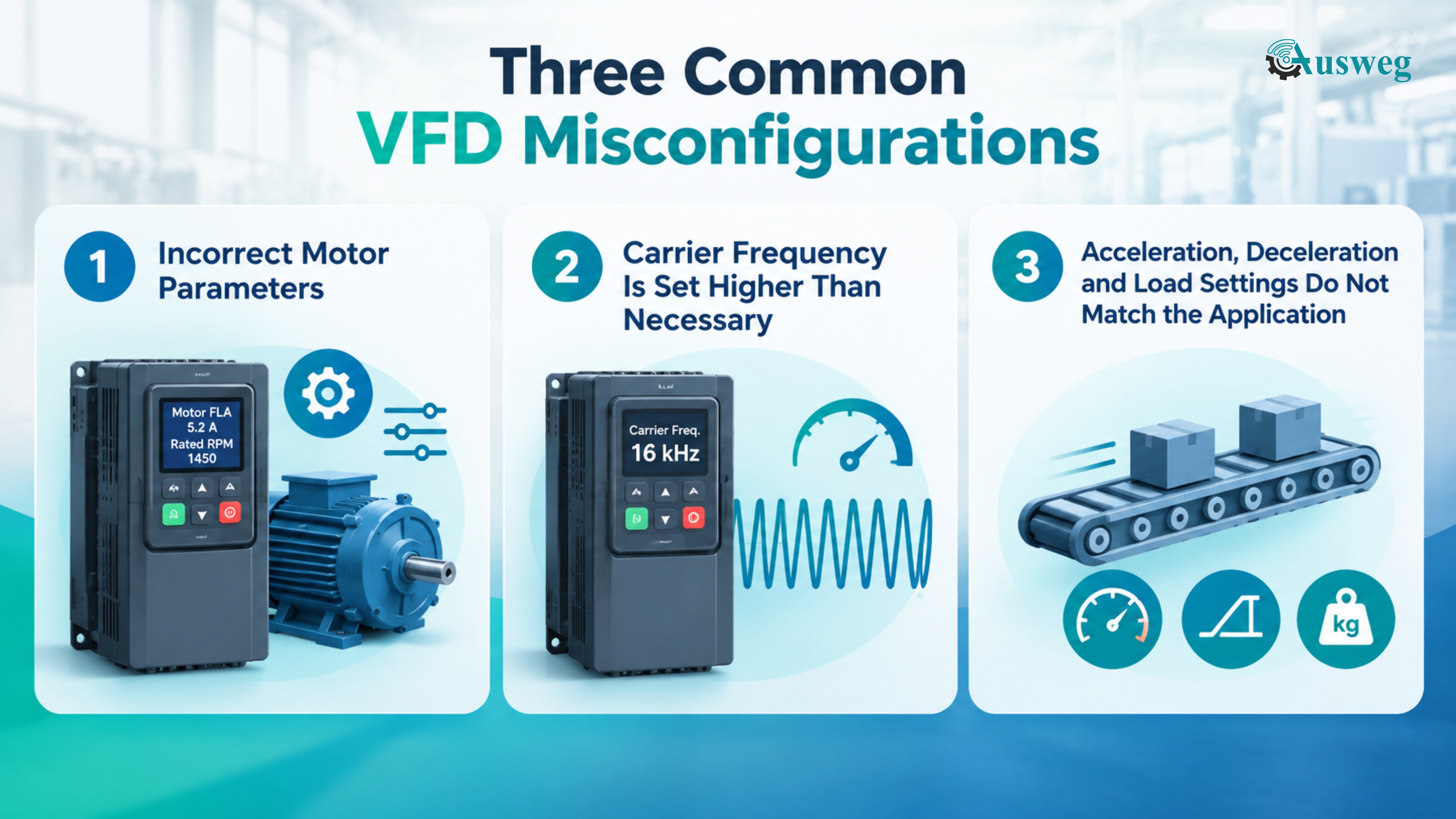
Incorrect Motor Parameters
A VFD needs motor information to control the motor effectively. Parameters such as rated voltage, frequency, power and RPM are not simply values to be entered during commissioning; they directly influence how the drive manages motor operation.
If the motor parameters entered into the VFD do not match the motor nameplate, the drive may operate with incorrect current limits or control characteristics. Under real operating conditions, this can result in excessive current, poor motor control or additional heat generation.
This becomes particularly important in applications where the motor frequently changes speed, operates under varying loads or requires high torque.
What is the solution?
The first step is to verify the motor nameplate and enter the correct electrical specifications into the VFD. Depending on the drive and application, motor tuning or suitable control-mode settings may also be required.
A Delta VFD provides a range of motor-control parameters that can be adjusted according to the motor and application. However, selecting the right parameters is just as important as selecting the drive itself.
At Ausweg, VFD selection is considered from an application perspective, looking at the motor, load, operating conditions and required control performance rather than simply matching the motor’s kW rating.
Carrier Frequency Is Set Higher Than Necessary
Carrier frequency is another setting that can influence VFD temperature.
A higher carrier frequency can reduce the switching noise produced by the motor and may provide smoother acoustic performance. However, increasing the carrier frequency also increases the number of switching operations performed by the VFD. More switching can result in higher switching losses and additional heat generation within the drive.
For a VFD operating continuously in a demanding environment, an unnecessarily high carrier frequency can reduce the thermal operating margin of the drive. The impact becomes more noticeable when the equipment is already exposed to high ambient temperatures, restricted airflow or continuous heavy-duty operation.
What is the solution?
Carrier frequency should be selected based on the application requirements instead of automatically choosing the highest available setting.
For example, a production machine may prioritize continuous operation over reducing motor switching noise. In such cases, the VFD parameters should be balanced according to the motor, load, operating cycle and environmental conditions.
Delta VFDs offer parameters that can be adapted to different industrial applications. The right setting, however, depends on how the drive is being used. This is one reason why VFD selection should be treated as part of the automation design rather than as an isolated electrical component.
Acceleration, Deceleration and Load Settings Do Not Match the Application
Another common reason for VFD stress is using acceleration and deceleration settings that do not suit the connected load.
When a motor accelerates, it requires torque to bring the load up to speed. If the acceleration time is set too short, the motor may demand higher current during the acceleration period. The same principle applies during deceleration, particularly when the connected equipment has high inertia.
Consider applications such as conveyors, machine tools, winding systems, pumps or material-handling equipment. Each has different load characteristics and operating requirements, and a setting that works well for one application may not be suitable for another. The problem becomes more significant when a VFD is selected according to motor power alone, without considering the actual duty and load characteristics.
What is the solution?
Acceleration and deceleration times should be configured according to the motor, load inertia, production cycle and required machine response. The VFD rating should also be evaluated based on the application’s operating conditions and torque requirements.
This is where application-based VFD selection becomes important. A suitable Delta VFD should not only match the motor rating but should also provide the required control performance for the machine.
For customers looking for industrial automation solutions in Coimbatore, this approach helps connect VFD selection with the machine-control requirement.
VFD Overheating Is Not Always a VFD Problem
An overheating drive can be a symptom rather than the root problem. Incorrect motor parameters, switching frequency, aggressive acceleration settings, unsuitable load conditions or even selecting a drive without considering the application’s duty can all contribute to thermal stress.
There are also other factors such as inadequate ventilation, high ambient temperature, dust accumulation and incorrect panel installation that can affect VFD operating temperature. This is why simply replacing the existing drive may not always address the underlying issue.
The better approach is to look at the whole application, from motor and load characteristics to VFD selection, configuration and panel environment.
Choosing the Right VFD for Your Application
For most users, VFD selection should go beyond a simple motor kW calculation. The right drive depends on factors such as:
- Motor power and rated current
- Required speed range
- Load and torque characteristics
- Acceleration and deceleration requirements
- Operating cycle and duty
- Environmental and panel conditions
- Required control method
- Braking and application-specific requirements
This becomes particularly important when upgrading existing machinery or designing a new automated system.
As an automation company in Coimbatore, Ausweg Info Controls works with automation products and solutions where components such as VFDs need to fit into the machine’s overall control requirements. With Delta VFDs forming part of the industrial automation portfolio, customers can evaluate options based on their actual application rather than choosing a drive solely from a catalogue rating.
Need Help Choosing the Right Delta VFD?
If your VFD is overheating, don’t immediately assume that the drive itself is the problem.
Whether you are replacing an existing VFD, building a machine or upgrading an industrial automation system, the right drive selection can make a real difference to motor control, machine reliability and overall operation.
If you are looking for a Delta VFD in Coimbatore, or evaluating VFD options for an automation application, connect with Ausweg Info Controls to discuss your motor, load and application requirements and identify a suitable VFD solution.
Leave a Reply