Robot & Cobot Vision Systems: 7 Key Selection Tips
In manufacturing, a tiny mistake in inspection can cause a product to be rejected, require rework and delay production. When industrial robots and collaborative robots (cobots) carry out tasks, it becomes very important for the vision system to see, locate and examine components accurately.
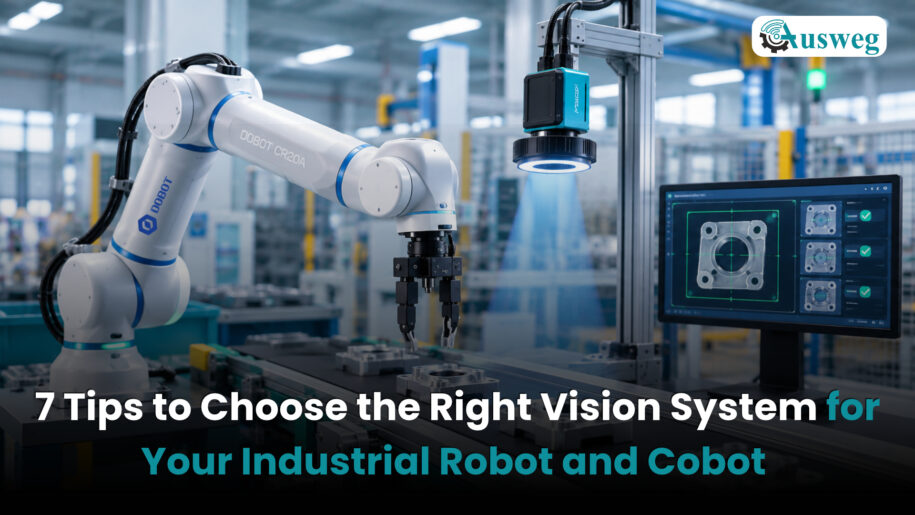
A machine vision system assists robots by using visual information to make decisions. It can help with quality inspection, component identification, pick-and-place, assembly verification and surface defect detection. However, picking a camera by itself is not enough. The vision system must work with the robot, the lighting arrangement, the production environment and the current automation equipment.
For manufacturers looking into automation in Coimbatore, Chennai or Bangalore, the following seven tips can help them choose the right vision system for their production needs.
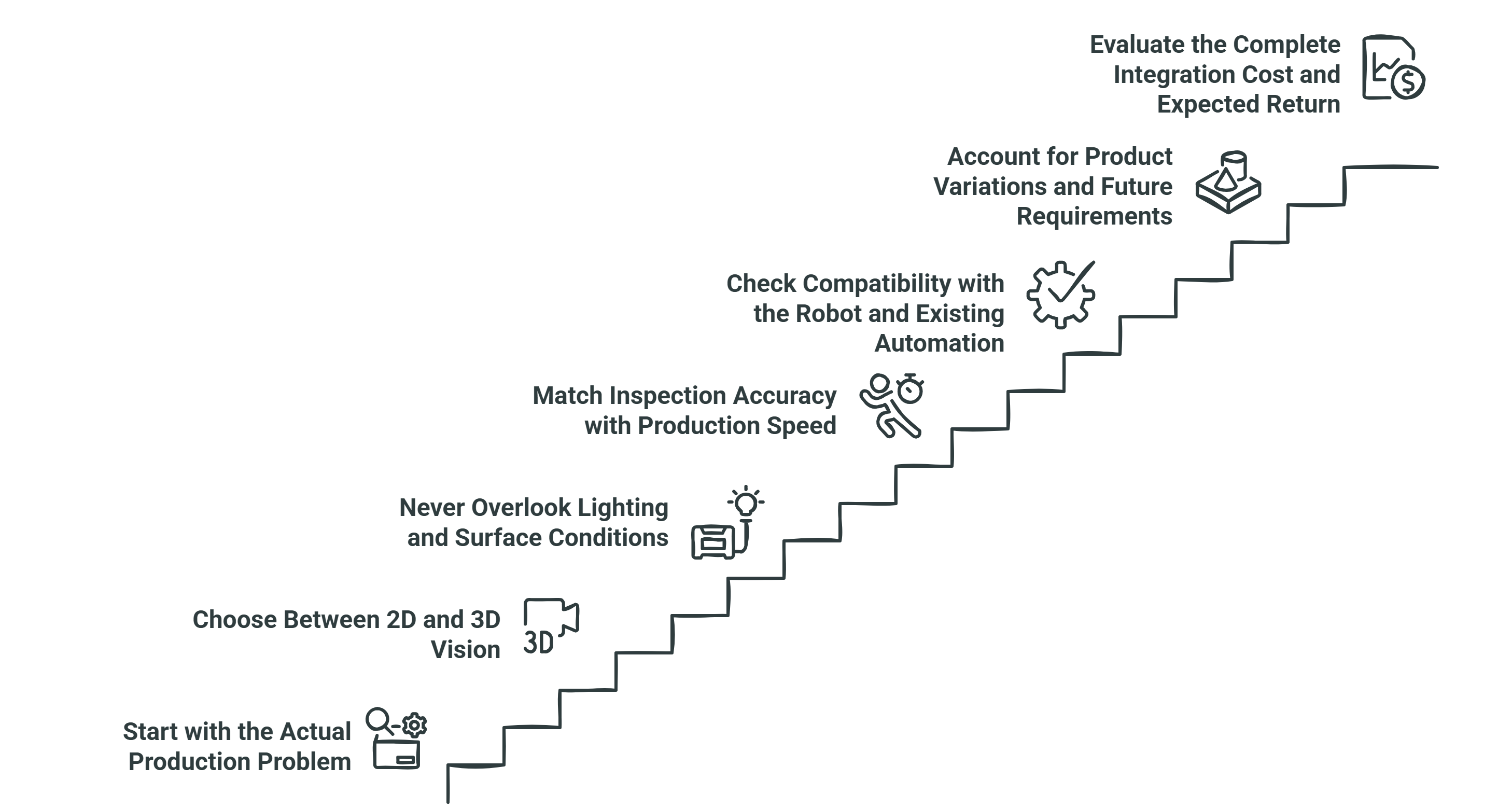
1Start with the Actual Production Problem
First figure out what the robot must see and decide. Is the task about checking product dimensions, spotting surface defects, identifying components or locating parts that are placed randomly?
Example: A robot that handles metal parts may need to find the position of a part before picking it up. A cobot that performs assembly may have to verify that a component is in the right spot before it moves on to the next step.
Each task needs its own vision setup. By defining the inspection rules, the variations of components and the limits of acceptable error, the choice of camera, software and system integration becomes easier.
2Choose Between 2D and 3D Vision
Not every robotic task needs a 3D camera. The correct choice depends on the information the robot must use to decide.
- 2D Vision: Good for checking surfaces, verifying labels, matching patterns and detecting the presence of components.
- 3D Vision: Helpful when the robot needs depth data, object height, spatial orientation or full three-dimensional positioning.
Example: Checking if a printed label is readable may need 2D vision. Picking parts that are arranged randomly in a bin may need 3D vision, depending on the task.
When evaluating a vision system in Coimbatore or other industrial hubs, manufacturers should focus on the task instead of picking technology just because of its specifications. The camera and robot must be set up to reach the performance needed for the application.
3Never Overlook Lighting and Surface Conditions
A high-resolution camera does not guarantee accurate inspection if the lighting is not suitable. Reflective metal surfaces, dark parts, transparent materials and shifting ambient light can hurt image quality. These problems are especially important when dealing with machined parts, electroplating, metal finishing and precision assembly.
Example: Imagine a robot inspecting a metal part. Reflections might look like defects even if the part is okay. The correct lighting setup, camera angle and image-processing logic can help separate real defects from unwanted reflections.
During system design, lighting and image capture should be considered together with the camera choice. Doing so creates a consistent inspection process in real production conditions.
4Match Inspection Accuracy with Production Speed
A vision system must satisfy both quality and cycle-time needs. Detailed inspection might not be needed for a simple presence check, but precision assembly may need more advanced image processing.
Manufacturers should evaluate:
- The required inspection repeatability
- The time taken to capture and process images
- The time for robot movement and positioning
- The production rate and acceptable rejection rate
If a production line runs at a fast cycle rate, a vision process that takes too long can create a bottleneck. Similarly, fast inspection is not useful if important defects are missed.
When planning automation with Ausweg, these needs can be looked at together during system integration. This helps line up vision processing, robot motion and production goals.
5Check Compatibility with the Robot and Existing Automation
A vision system should not work in isolation. It must communicate properly with the robot controller, the PLC and other equipment that are part of the production process. Depending on the task, integration may include robot-to-camera communication, coordinate calibration, trigger signals, inspection results and handling of rejected parts.
Example: When the camera identifies a component’s position, the robot must receive coordinates to pick it accurately. When the vision system detects a faulty part, the inspection result may need to trigger an alarm, a reject mechanism or a production hold.
Whether the project involves robot or cobot integration, planning is essential. This is where a system integrator such as Ausweg can bring together vision technology, robotics and industrial automation into one production solution.
6Account for Product Variations and Future Requirements
Will the same production line handle different component sizes, colours, models or orientations? If so, the vision system must be evaluated for its ability to accommodate these variations.
A setup designed around one product may require additional configuration when new variants are introduced. Manufacturers should check whether inspection parameters, image-processing rules and product recipes can be adjusted efficiently.
Example: An assembly line handling multiple component models may need the vision system to identify each model and guide the robot accordingly.
Planning for product variation during system design can reduce the need for modifications later. It also helps manufacturers assess whether the proposed solution can support changing production requirements.
7Evaluate the Complete Integration Cost and Expected Return
Camera price is only one part of the investment. Overall cost may include lighting, lenses, vision software, robot communication, mounting arrangements, calibration, PLC integration and production testing.
Manufacturers should evaluate expected benefits alongside these costs. Relevant measures include:
- Inspection consistency
- Reduced manual checking
- Lower rework
- Fewer incorrect picks
- Improved production traceability
For companies evaluating a vision system in Coimbatore, Chennai or Bangalore, the important question is not simply which camera costs less. The important question is whether the complete robotic vision solution meets required production standards and business objectives.
A well-planned integration approach helps connect technology investment to manufacturing needs.
Integrating the Right Vision System with Ausweg
Choosing a vision system involves more than comparing camera specifications. Application, component characteristics, lighting, inspection accuracy, cycle time and robot communication must work together to achieve production results.
Ausweg Info Controls Pvt Ltd brings together automation and robotics system integration to help manufacturers evaluate application requirements and develop solutions aligned with production processes.
For businesses exploring vision applications in Coimbatore, Chennai and Bangalore, starting with a clearly defined manufacturing challenge can help identify appropriate technology and integration requirements.
Planning a vision application for your production line?
Connect with Ausweg to discuss application requirements and explore how industrial robots, cobots and machine vision can be integrated into your manufacturing process.
🌐 Website: https://ausweginfocontrols.com/
📩 Email: marketing@ausweginfocontrols.com
📞 Contact: +91 72001 15554 | +91 99521 95027
Leave a Reply